Key takeaways
- An SDR starts sales conversations and passes good prospects to a sales colleague.
- The work is research, outreach, qualifying and booking meetings.
- SDRs usually do not close the sale. An account executive does.
- Persistence, clear writing and careful records matter most.
- You can practise research and outreach with made-up companies.
Before a sale is closed, someone has to start the conversation. In many companies that person is a sales development representative, or SDR. Much of the work happens by phone, email and online tools. This guide explains what SDRs do, how the work differs from closing a deal and what you can practise before you apply.
What is an SDR?
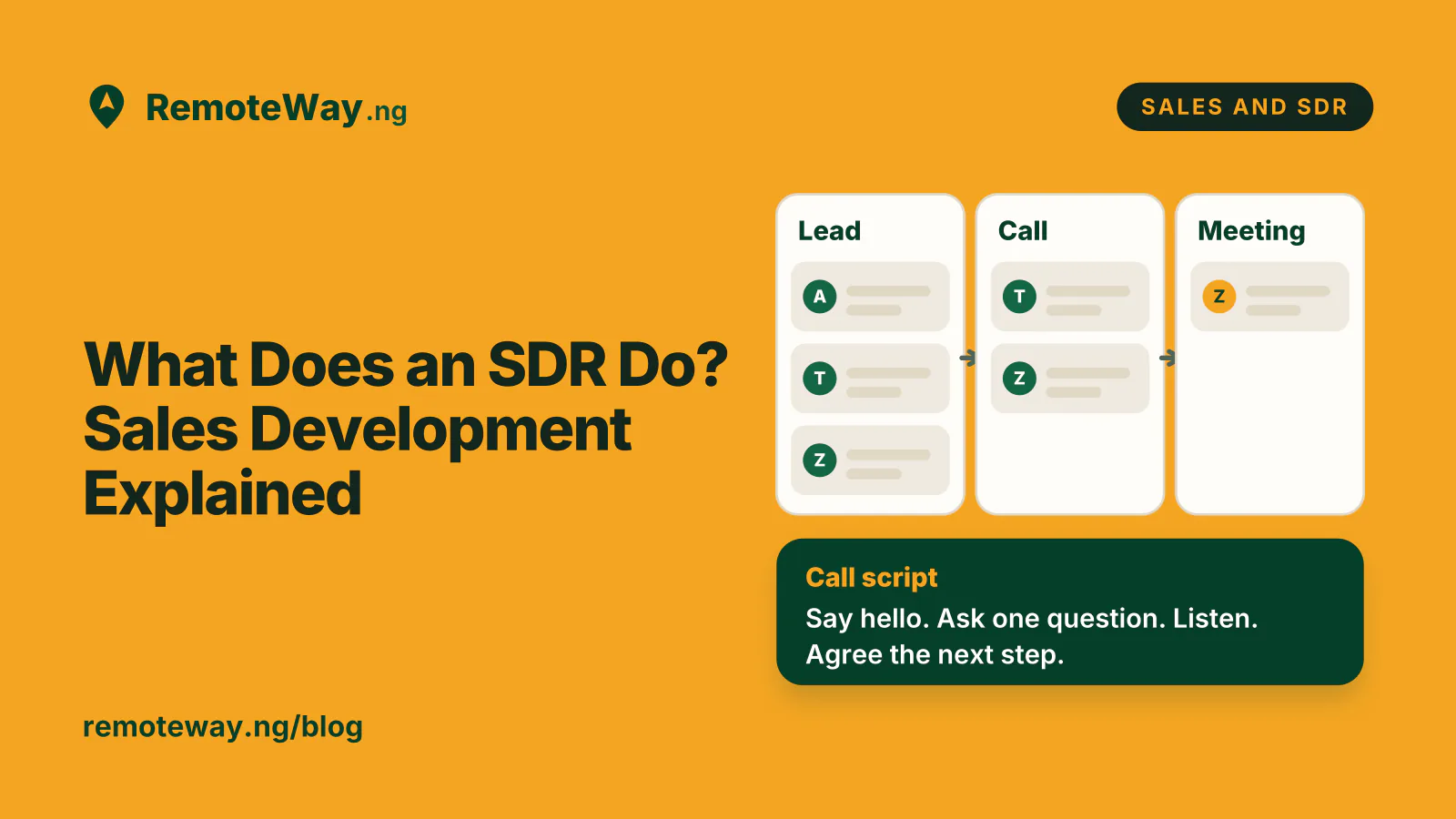
An SDR handles the early, pre-sale stages of the sales process. They often link marketing, which brings in leads, with the sales colleague who closes the deal. Their job is to decide who is worth talking to and to start that conversation well.
What does an SDR do day to day?
The work falls into four groups.
| Activity | What it means |
|---|---|
| Prospecting | Define the kind of company that fits, find examples and reach out by phone, email or social channels |
| Qualifying | Research a lead and ask questions to decide whether it is worth pursuing |
| Nurturing | Follow up, share useful information and track how people respond |
| Booking meetings | Set up a meeting for a sales colleague and brief them on the prospect |
Alongside this, SDRs keep records of every contact in a tracking tool, often called a CRM, so nothing is forgotten.
How is an SDR different from an account executive?
The SDR does the early work. The account executive, sometimes called the closer, takes qualified prospects forward and closes the deal. The partnership matters: a good SDR sends fewer, better meetings, and the executive uses their time well.
What skills does an SDR need?
Practical skills
- Research: find a company's size, products and likely needs.
- Writing: short, relevant messages.
- Listening: ask questions and note the answers.
- Record keeping: accurate notes in a tracker.
Personal habits
- Self-discipline and routine.
- Persistence when people say no or do not reply.
- Willingness to learn from feedback.
- Curiosity about other people's businesses.
Handling objections is a skill you can practise. A polite "not now" is normal, and a good SDR responds with respect and moves on or follows up later.
How can you practise?
Build a small practice kit with made-up companies:
- Describe an ideal customer for a made-up product in three lines.
- Research five pretend companies and write one useful fact for each.
- Write an outreach email for each, with a clear subject line. Our guide to writing an email people open helps.
- Write a thirty-second call opening and read it aloud.
- Make a simple tracker with columns for company, contact, date, status and next step.
- Write a one-paragraph briefing for a sales colleague before a meeting.
Use made-up names only. Never contact real people for practice.
What should you avoid?
- Sending the same message to everyone. Relevance matters.
- Pressuring people. Respect a refusal.
- Making claims you cannot support about a product.
- Sloppy records, which waste everyone's time.
What tools do SDRs use?
A CRM to track leads, email and calendar tools, communication tools for team work, and increasingly AI tools for research and drafting, always with human review. Learn the ideas first, and the exact tool will be easy to pick up. See tools remote teams use for the general set.
Where can you learn it properly?
Sales development combines research, writing and conversation, so it helps to learn in order with practice and feedback. RemoteWay's Sales and SDR program is self-paced, with comprehensive training videos created by top experts in their fields. We teach skills. We do not promise jobs or income, and we never ask you to pay to be hired. For the wider picture of skills that suit remote work, read online skills to learn for remote work in Nigeria.
Frequently asked questions
What is a sales development representative?
A sales development representative, or SDR, handles the early stage of the sales process. They find and research prospects, contact them by email, phone or social channels, check whether the prospect is a good fit and book a meeting for a sales colleague who handles the rest of the sale.
What is the difference between an SDR and an account executive?
An SDR does the early work: finding prospects, starting conversations and qualifying interest. An account executive, sometimes called a closer, takes qualified prospects forward, runs demos or detailed talks and closes the deal. The two work closely, because the quality of the SDR's meetings shapes the executive's time.
Do SDRs only make cold calls?
No. Cold calls are one method. SDRs also use email, social messages and follow-ups, and they spend much of their time researching prospects and keeping accurate records in a customer tracking tool. Good outreach is relevant and respectful, and shows that you understand the prospect's situation.
Sources
Ready to learn this properly?
Creating an account costs nothing. Every program is self-paced, with comprehensive training videos created by top experts in their fields. We teach skills. We don't promise jobs or income.
Keep reading
What Is Remote Work? A Plain Guide for Nigerians
What remote work means, how it differs from hybrid and freelance work, and what you need to start in Nigeria: a plain guide with the words you will meet.
What Is Data Analytics? A Beginner Explanation
What data analytics is, the six steps analysts follow, the tools and skills involved, and how a beginner can practise with a small table and a clear question.
What Does a Virtual Assistant Do All Day?
Find out what a virtual assistant does each day: inbox, calendar, research, documents and task tracking for clients, and the skills you need to start.