Key takeaways
- Choose one skill and learn it properly instead of sampling many.
- Nine skill areas suit remote work: admin, support, data, sales, social media, writing, email, no-code and bookkeeping.
- Employers value analytical thinking, learning ability and technology skills, and these can be built with practice.
- Practice work you can show matters more than a long list of courses.
- Be careful with anyone who promises a job or asks for money to place you.
Remote work rewards people who can do something specific and communicate clearly. That means the first step is not finding a job. It is choosing a skill and learning it properly. This guide lists the online skills that suit remote work, how to pick one, and how to practise so you have something real to show.
Which online skills suit remote work?
These skills can be done with a laptop and an internet connection, and each has a clear set of tasks you can practise.
| Skill | What you do | You might enjoy it if you like |
|---|---|---|
| Virtual assistance | Manage inboxes, calendars, research and documents for a client | Being organised and reliable |
| Customer support | Answer customers calmly in chat and email | Helping people and staying patient |
| Data analytics | Clean data, find patterns and share findings | Numbers, tables and questions |
| Sales development | Research prospects and set up conversations | Talking to people and persistence |
| Social media management | Plan and publish posts, reply to followers | Creating and planning content |
| Content writing and copywriting | Write articles, pages and ads | Words and clear thinking |
| Email marketing | Plan and write email campaigns | Writing and testing ideas |
| No-code development | Build tools and automations without programming | Solving problems with logic |
| Bookkeeping and admin support | Record, match and check financial records | Accuracy and order |
You can read about each in our guides, such as what a virtual assistant does and what data analytics is.
Why these skills?
A major global report on the future of work expects analytical thinking, resilience and flexibility, curiosity and lifelong learning, and technology skills to grow in importance. Technology skills such as AI and big data, networks and cybersecurity, and technological literacy are growing fastest. You do not need to master all of these at once. They show that the ability to learn, think clearly and use digital tools is valued across many jobs.
How do you choose one skill?
- List what you already do well. Organising, explaining, writing, spotting errors, calming people down.
- Try a small task in two or three areas. Write a short email, tidy a spreadsheet, reply to a mock customer message.
- Notice what you want to repeat. Energy is a clue.
- Check the daily tasks. Read what the work actually involves, not just the title.
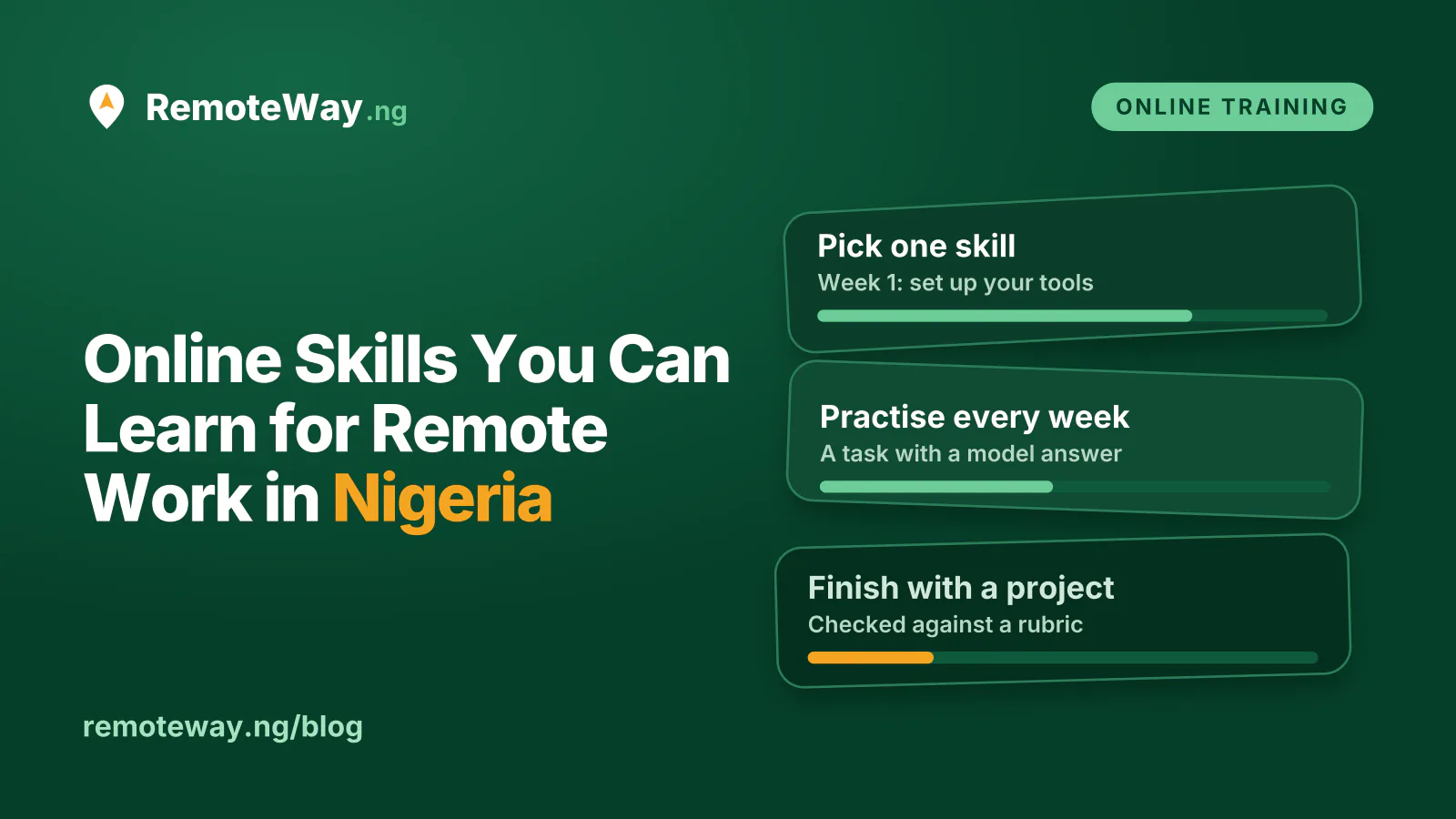
- Choose one and commit for a few months. Switching every week resets your progress.
How should you learn it?
Research on how people learn is clear about what works. Spreading study over days and weeks beats cramming. Recalling things from memory strengthens them more than rereading. Mixing related problem types helps you tell which method fits which problem.
So plan short, regular sessions, test yourself without notes, and practise real tasks. Our weekly study plan shows one way to do this around a busy life. When you compare courses, use our guide to choosing an online course.
What practice work should you build?
Employers and clients want proof. Build two or three small projects:
- A virtual assistant can build a sample weekly calendar and a one-page report.
- A support learner can write a set of calm replies to mock complaints.
- A data learner can answer three questions from a small table.
- A writer can publish two short articles.
Use made-up names and data, never real customers' details. Keep each project to one page, and explain what you did and what you checked.
How do you stay safe?
Be careful with offers that promise a job, ask for fees to place you, or rush you. The US consumer protection agency warns about requests to pay for training, certifications or starter kits as a condition of getting work. Honest schools teach skills and do not guarantee jobs. Read how to spot a fake remote job offer before you pay anyone.
What next?
Pick one skill and write it down. Choose your weekly study times. Then look at a structured program so you learn in the right order. RemoteWay's programs, from Virtual Assistant to Bookkeeping and Admin Support, are self-paced, with comprehensive training videos created by top experts in their fields. We teach skills. We do not promise jobs or income.
Frequently asked questions
Which online skill is best for beginners?
There is no single best skill. Start with one that matches what you already enjoy: organising suits virtual assistance, patience suits customer support, numbers suit data and bookkeeping, writing suits content and email. Try a free introduction in two or three areas, pick one, and commit to it for a few months.
Do I need a degree to learn an online skill?
No degree is needed to learn most of the skills in this guide. What matters is that you can do the work. A degree may help for some roles, but practice projects, clear communication and a tidy portfolio show real ability. Check what a specific employer asks for before you apply.
How long does it take to learn an online skill?
It depends on the skill and the time you can give each week. A structured, self-paced program with weekly practice usually takes a number of weeks to cover the basics, and further practice builds confidence. Consistent study, such as a little every day, works better than long sessions once a month.
How do I avoid online training scams?
Be careful with any course or offer that promises a job, asks for fees to place you, or pressures you to pay fast. A good school shows its outline, explains what you will learn, and does not guarantee outcomes. Search reviews, ask questions and read the terms before paying.
Sources
Ready to learn this properly?
Creating an account costs nothing. Every program is self-paced, with comprehensive training videos created by top experts in their fields. We teach skills. We don't promise jobs or income.
Keep reading
How to Choose an Online Course Without Wasting Your Time
A simple checklist for choosing an online course: what to look for in the outline, practice tasks and feedback, and the warning signs to avoid before you pay.
A Weekly Study Plan for Busy People
Build a realistic weekly study plan around work, family and unreliable power, using spaced practice and self-testing so what you learn actually stays with you.
The Tools Remote Teams Use Every Day
A beginner guide to the tools remote teams use daily: chat, video calls, calendars, shared documents and task boards, and how to learn them with practice.