Key takeaways
- Remote work means doing a job away from a shared office, connected to your team online.
- Remote, hybrid and freelance are different arrangements, so read an offer carefully.
- Clear writing, time management and a reliable setup matter more than where you live.
- Learn a specific skill first, then build practice work you can show.
- Check every offer before you reply, because fake remote offers exist.
Remote work is any job that you do away from a shared office. You stay connected to your team through the internet, so the place you sit matters much less than the work you deliver. This guide explains the idea in plain words, the different kinds of remote work, and what a beginner in Nigeria needs before starting.
What does remote work mean?
Remote work means your daily work does not depend on a company building. A typical remote day has you reading messages, doing tasks on a laptop, joining a call or two, and sending updates. One large company describes a fully remote role as a job with no expected visits to an office, where the person can live anywhere with reliable internet and is still expected to be reachable during agreed hours.
Many people use the word "telecommuting" for the same idea. It is the older word. You will also see "working from home", which describes the place rather than the arrangement.
Remote, hybrid and all-remote
These words describe how a company is set up:
| Word | What it means |
|---|---|
| Remote | The role is done away from the office, with no regular office days. |
| Hybrid | Some days at the office, some days elsewhere. Also called part-remote. |
| All-remote | The whole company has no central office. Everyone works from where they choose. |
| Asynchronous | People do not need to be online at the same moment. Messages are answered when the person is working. |
| Synchronous | People meet or talk at the same time, such as on a video call. |
Asynchronous work is the habit that surprises beginners most. In an async team you write clearly, so a colleague in another time zone can act on your message without a call.
Is remote work the same as freelancing?
No, and the difference matters when you read an offer.
- A remote employee works for one organisation, usually on a regular schedule, and takes tasks from a manager.
- A freelancer sells services to several clients, finds their own work, and manages their own time and records.
- A contractor sits in between: one client, a defined scope, often a fixed period.
Both employees and freelancers can work from home. Ask which one an offer is before you say yes.
What do you need to start working remotely in Nigeria?
You do not need much to start, but each item should be reliable.
- A device that works every day. A laptop is best for most tasks. Keep your files backed up.
- Internet you can count on. Know your data plan, keep a second option such as a second SIM, and learn to save data. Our guide to studying and working online with low data and unstable power covers this.
- A plan for power cuts. A charged power bank, a charged phone and offline copies of key documents keep you working.
- A skill someone needs. Remote employers hire for what you can do, not for where you live. Pick one skill and practise it. See online skills to learn for remote work.
- Clear written English. Most remote teams run on chat and email. Short, clear messages build trust fast.
- A professional email address and a simple profile. Use your real name. Keep a one-page summary of your skills ready.
Know the time zone
Nigeria uses West Africa Time (WAT). Many remote clients are in other time zones, so always confirm meeting times in both zones. A calendar that shows two time zones prevents missed calls.
What are the risks to watch for?
Remote work has real downsides. People report feeling isolated, finding it hard to switch off, and paying for their own desk and equipment. Home distractions are common if you do not have a separate space. Plan a routine, keep working hours, and talk to colleagues, not only to your screen.
Scams are the other risk. The US consumer protection agency lists warning signs that apply anywhere: being asked to pay for training or equipment to get a job, promises of big pay for little work, and cheques that ask you to send part of the money back. A real employer does not charge you to be hired. Read how to spot a fake remote job offer before you reply to any offer.
How do you get started?
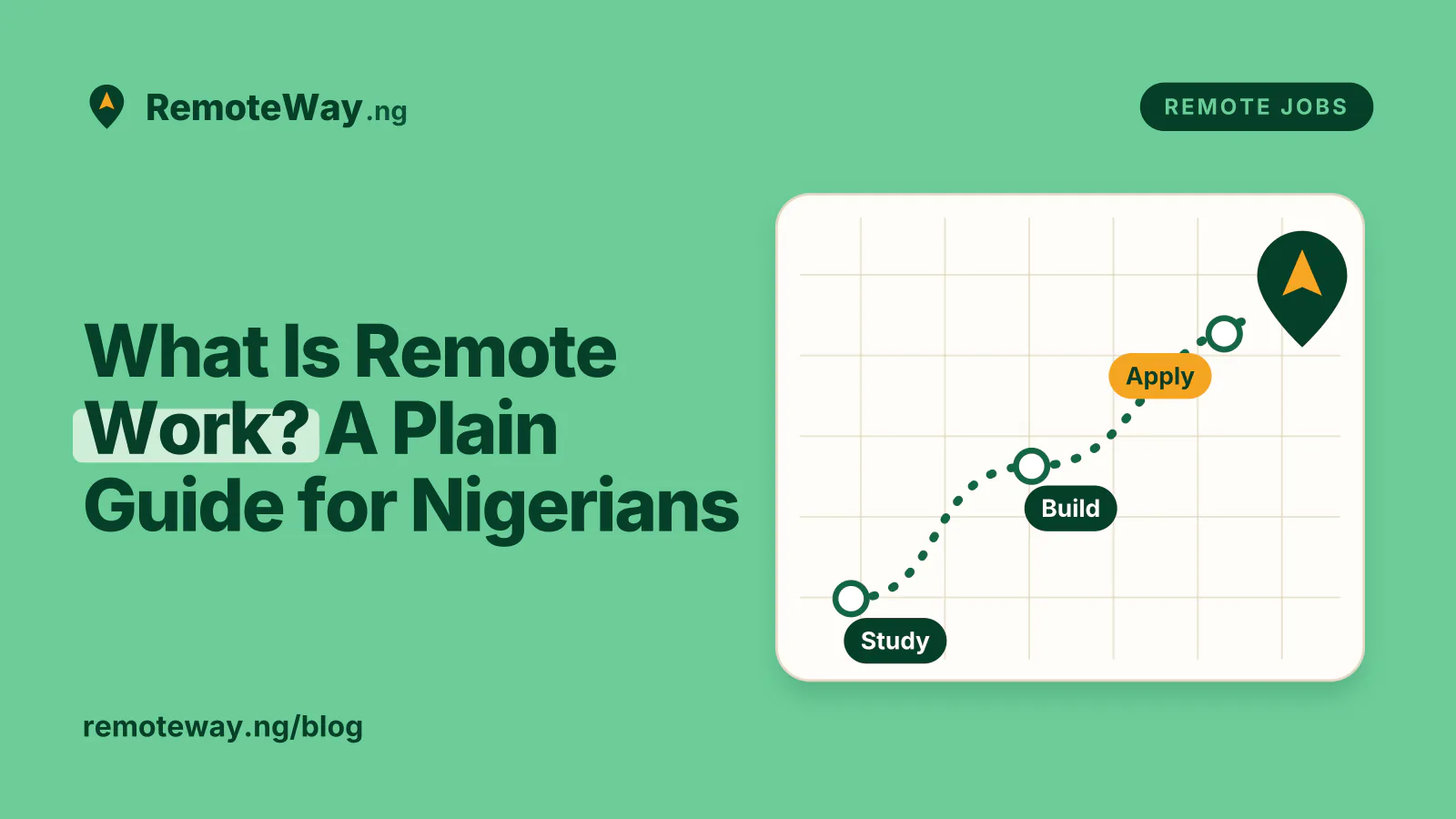
- Choose one skill, such as administration, customer support or data work.
- Learn it in order, with practice tasks and feedback, not by jumping between videos.
- Build two or three small pieces of practice work you can show.
- Set up your tools and a calm routine.
- Apply carefully, and verify every employer.
RemoteWay teaches skills. We do not promise jobs or income, and no honest school can. What a good course gives you is real practice and proof of what you can do. The Virtual Assistant and Customer Support programs are two examples of a structured path.
Frequently asked questions
What does remote work mean?
Remote work means doing your job away from a shared office. Most people work from home, a co-working space or another place they choose, and stay in touch with colleagues through email, chat and video calls. The work itself can be any kind that can be done with a computer and an internet connection.
Is remote work the same as freelancing?
No. A remote employee has one employer and a regular role, while a freelancer sells services to several clients and manages their own work. Both can happen from home. A remote role may be permanent, part-time or for a fixed period, so read the terms of any offer before you agree.
What do I need to start working remotely in Nigeria?
You need a working device, a dependable internet connection, a plan for power cuts, and a skill someone needs, such as admin support, customer support or data work. You also need clear written English, because most remote teams communicate in writing. A tidy email address and a simple online profile help too.
How do I know a remote job offer is real?
A real employer does not ask you to pay to be hired. Search the company name with words like review or scam, speak to someone you trust, and be careful with offers that arrive from strangers. Never send money or bank details to get started. Our guide to fake remote job offers lists the warning signs.
Sources
Ready to learn this properly?
Creating an account costs nothing. Every program is self-paced, with comprehensive training videos created by top experts in their fields. We teach skills. We don't promise jobs or income.
Keep reading
The Tools Remote Teams Use Every Day
A beginner guide to the tools remote teams use daily: chat, video calls, calendars, shared documents and task boards, and how to learn them with practice.
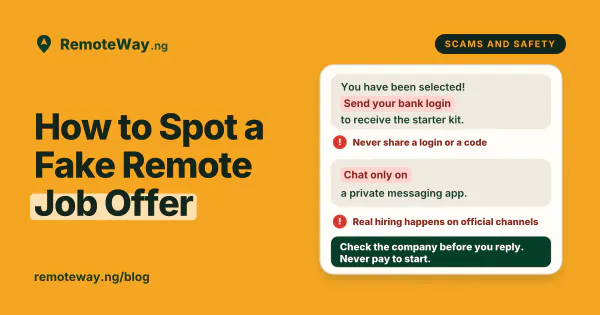
How to Spot a Fake Remote Job Offer
Learn the warning signs of a fake remote job offer, the checks to run before you reply, and what to do if you have already paid or shared your details.
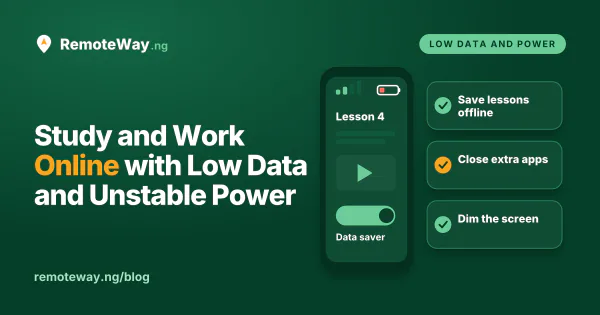
Study and Work Online with Low Data and Unstable Power
Practical ways to study and work online when data is limited and power is unreliable: data saver settings, offline files, battery habits and a backup plan.