Key takeaways
- A real employer does not ask you to pay to get a job.
- Big pay for little work and pressure to reply fast are warning signs.
- Never deposit a cheque and send part of the money back.
- Search the company name with the word scam or review, and ask someone you trust.
- If you paid, contact the company you used to send the money straight away and report it.
Fake remote job offers are common because remote work is popular and scammers know it. The good news is that most of them follow the same pattern. If you know the pattern, you can stop them in a minute. This guide lists the warning signs, the checks to run, and what to do if something has already gone wrong.
What does a fake remote job offer look like?
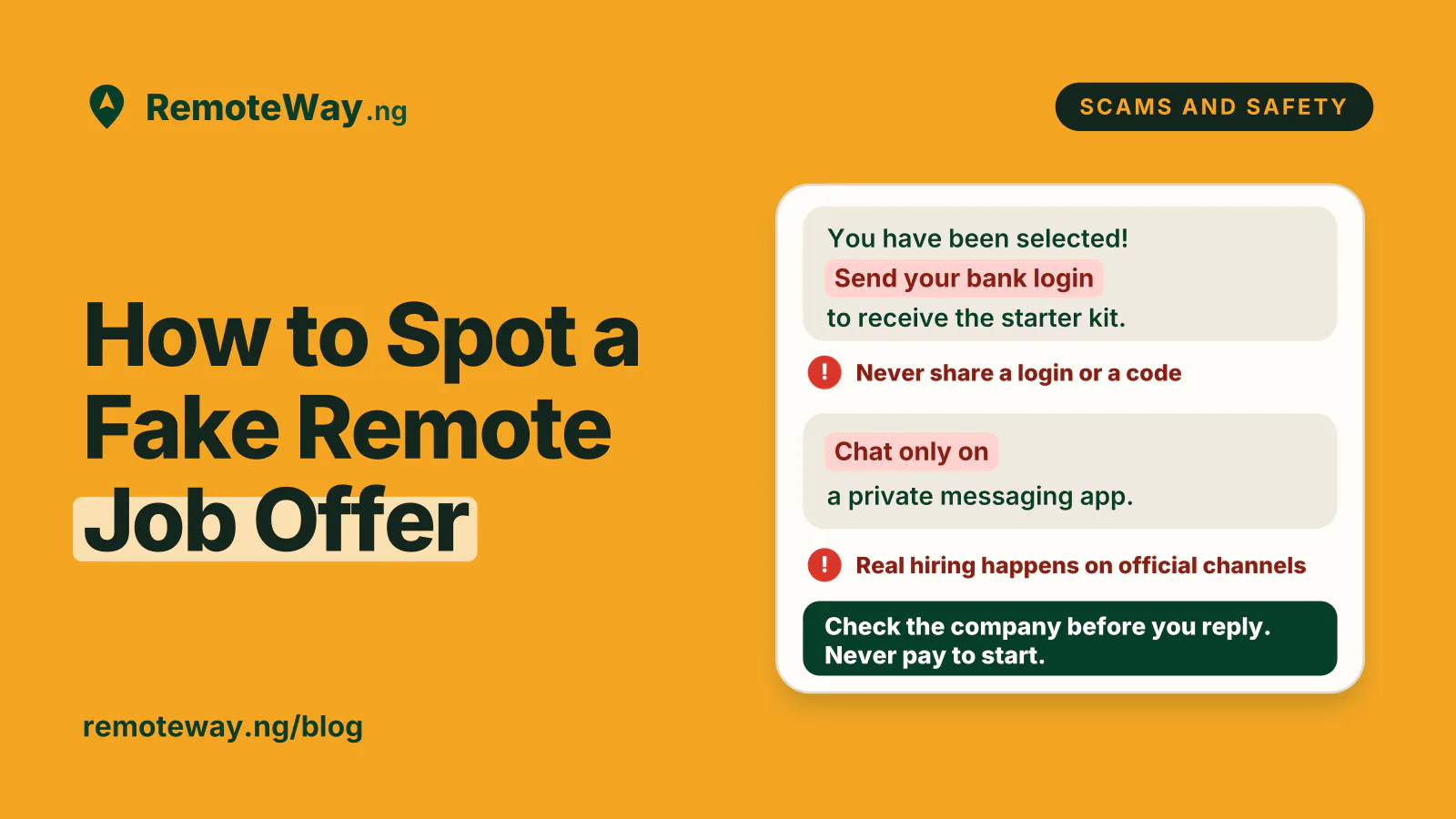
A fake offer wants one of two things: your money or your personal details. The message is usually friendly and urgent. It may say you have been selected, even though you never applied.
Common patterns include:
- A fee to start. You are asked to pay for training, a starter kit, equipment, a certificate, a background check or "registration".
- High pay for little work. The message promises big rewards for a few easy hours.
- A cheque that needs part returned. You are sent a cheque or transfer, told to keep some, and asked to send the rest to someone else. The original payment later fails and you lose your own money.
- Payment by gift cards, crypto or transfers. These are hard to get back, which is why scammers ask for them.
- Package or payment forwarding. You are asked to receive items or money and pass them on.
- Personal details too soon. You are asked for ID numbers or bank details "for payroll" before any real hiring has happened.
Which warning signs should you check first?
Use this short list on any offer.
| Warning sign | Why it matters |
|---|---|
| You must pay to get the job | Real employers pay you. They do not charge applicants. |
| You never applied or were interviewed | A genuine offer follows a real process. |
| Everything happens in a private chat | Real companies use their own email and a named person. |
| The email uses a free address | Check that it ends in the company's own web address. |
| Pressure to reply in minutes | Pressure stops you from checking. |
| Pay seems too good for the work | If it sounds too good, treat it as a warning. |
How do you check a company before you reply?
Take ten minutes and do these in order.
- Search the name. Add words such as "scam", "review" or "complaint" and read what comes up.
- Look for a real presence. A working website, an address, a phone number and real staff.
- Check the sender. Compare the email address with the company's website. A mismatch is a bad sign.
- Ask for a video call with a named person, and ask for the offer in writing.
- Talk to someone you trust before you accept. Scammers hope you will not.
- Keep your details back. Share ID or bank details only after you have verified the employer and signed a real contract.
What should you never do?
- Never pay to get a job.
- Never deposit a cheque and send money back.
- Never buy gift cards or send crypto for an employer.
- Never share a password, a one-time code or a card PIN.
- Never feel rushed to decide. A real offer can wait a day.
What if you already paid or shared details?
Act quickly and calmly.
- Contact your bank or the payment service you used and ask about stopping or reversing the payment.
- Change passwords on any account the scammer could reach, and turn on two-step sign-in.
- Save screenshots, numbers and messages as evidence.
- Report the offer to the site or app where you saw it, and to the authorities in your country.
- Tell a friend or family member. Shame keeps scams alive, and others can help you think clearly.
Do not send more money to recover what you lost. Scammers often come back with a "recovery" offer.
How does this connect to learning a skill?
The best protection is knowing what a real remote role looks like. Read what remote work is, learn a skill properly, and prepare a clear CV. When you know what you offer and what a fair arrangement looks like, scam offers stand out. RemoteWay teaches skills and never asks you to pay to be hired, because we do not hire you. See the programs, such as the Virtual Assistant program, to learn at your own pace.
Frequently asked questions
What is the biggest warning sign of a fake job offer?
Being asked to pay. Scammers ask for fees for training, equipment, registration, background checks or a starter kit. A real employer pays you for work and does not charge you for the chance to do it. If money has to leave your account before the job begins, stop and do not continue.
Can a real company contact me first on WhatsApp or Telegram?
Recruiters do sometimes write first, but treat any unexpected message with care. Real hiring uses a company email address, a proper interview and a written offer. Be wary of anyone who wants to run everything in a private chat app, rushes you, or avoids a video call with a named person.
What should I do if I already paid a job scammer?
Contact your bank or the payment service you used straight away, explain what happened and ask about reversing the payment. Keep screenshots and messages. Report the scam to the platform where you saw the offer and to the proper authorities in your country. Do not send more money to get the first payment back.
How can I check if a company is real?
Search the company name with words like review, scam or complaint. Look for a working website, a real address, and staff you can find on professional networks. Check that the email comes from the company domain, not a free address. Ask someone you trust to look at the offer before you reply.
Sources
Ready to learn this properly?
Creating an account costs nothing. Every program is self-paced, with comprehensive training videos created by top experts in their fields. We teach skills. We don't promise jobs or income.
Keep reading
What Is Remote Work? A Plain Guide for Nigerians
What remote work means, how it differs from hybrid and freelance work, and what you need to start in Nigeria: a plain guide with the words you will meet.
The Tools Remote Teams Use Every Day
A beginner guide to the tools remote teams use daily: chat, video calls, calendars, shared documents and task boards, and how to learn them with practice.
Study and Work Online with Low Data and Unstable Power
Practical ways to study and work online when data is limited and power is unreliable: data saver settings, offline files, battery habits and a backup plan.