Key takeaways
- A good course shows its full outline before you pay.
- Look for practice tasks, a model answer and feedback, not only videos.
- Be careful with promises of jobs or income, and with fees to place you.
- Check the time you need each week and make sure it fits your life.
- Read the terms, including what happens if you change your mind.
There are thousands of online courses, and many are good. Some waste your time, and a few are designed to take your money. This guide gives you a simple checklist so you can compare courses calmly and choose one you will finish.
What should you check before choosing a course?
Use these five checks. A good course passes most of them.
| Check | What to look for |
|---|---|
| Outline | A full list of lessons, in order, that you can read before paying |
| Practice | Tasks to do, with a model answer or feedback |
| Time | A clear estimate of hours per week and total duration |
| Honesty | No promises of jobs or income, and no pressure |
| Terms | Plain rules on payment, access and changes of mind |
Is the outline visible?
You should be able to see what you will learn before you pay. Look for lesson titles in a sensible order, and an outcome for each lesson, such as "Build a weekly calendar across three time zones". Vague outlines such as "learn everything about marketing" make it hard to judge. If a provider hides the outline, ask for it. If they refuse, move on.
Will you practise, or only watch?
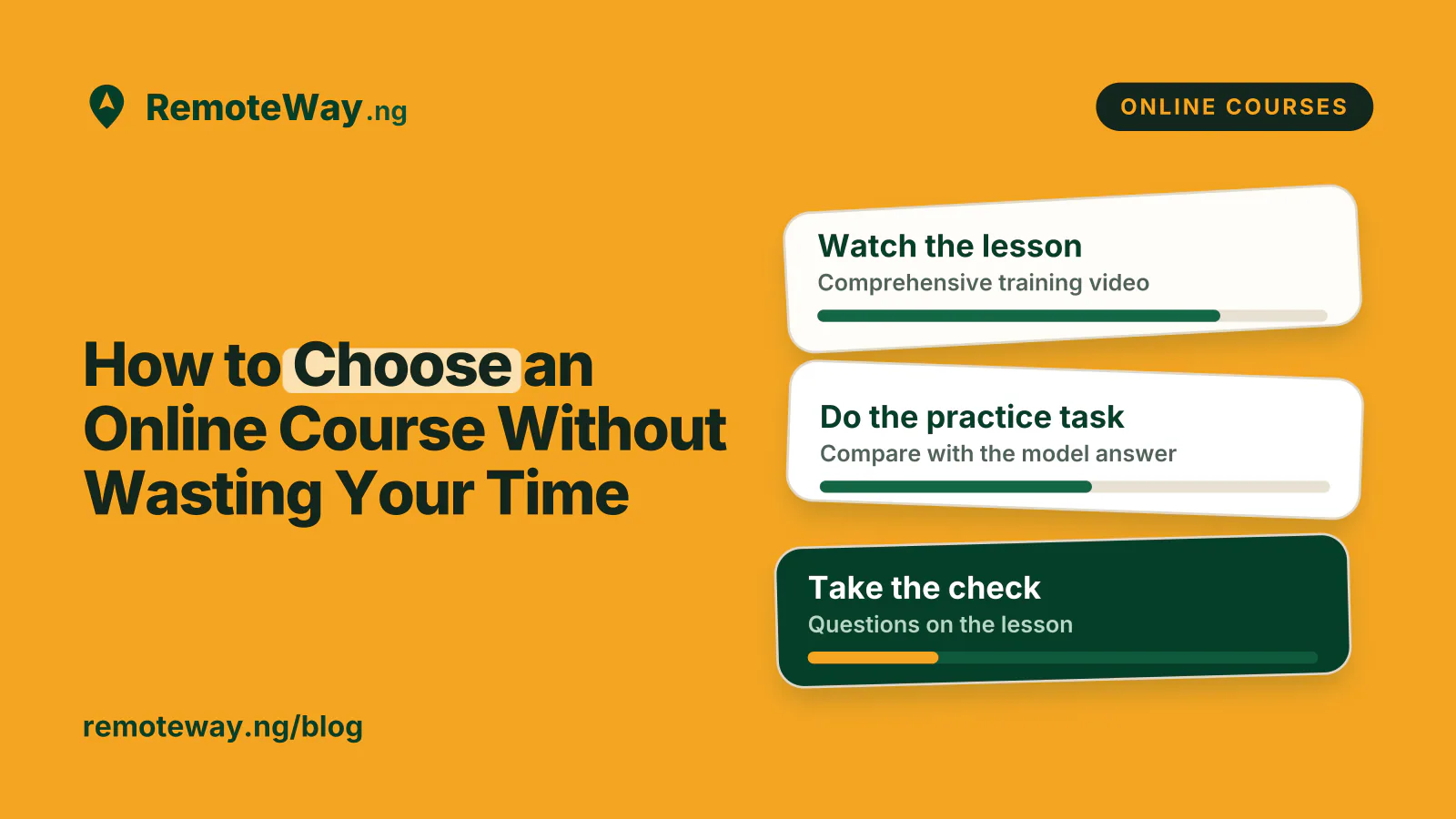
Watching a video feels like learning but fades fast. Research on learning shows that recalling information from memory and practising over several sessions work better than rereading or cramming. So a good course makes you do things: a task after each lesson, a check of what you remember, and a model answer to compare with.
Ask these questions:
- Is there a practice task in every week?
- Is there a model answer or feedback?
- Is there a final project that uses what you learned?
Does the time plan fit your life?
Be realistic. If a course needs more hours each week than you have, you will fall behind and quit. Pick a plan you can keep, even if it is slower. A self-paced course helps when your schedule changes, as long as you set your own weekly times. Our weekly study plan can help you decide.
Are the claims honest?
Be careful with these:
- A sure job or sure income. No school can promise either.
- Fees to be placed with an employer. The US consumer protection agency lists requests to pay for training, certifications or placement as a sign of job scams. A genuine placement does not ask you for money first.
- Pressure. "Pay in the next hour" is a sales trick, not a teaching method.
- Fake countdowns and endless "last chance" offers.
A good provider explains what the course teaches and what it does not. It does not claim to change your life.
Are the terms clear?
Read the page on payment and access before you pay. Check what you get, how long you have access, what happens if something goes wrong, and whether sales are final. If you cannot find it, ask. Keep a copy of the terms or a screenshot.
How do you compare two courses?
- Put the outlines side by side.
- Count the practice tasks.
- Compare the weekly time needed.
- Search each provider's name with "review" and "complaint".
- Pick the one you can imagine finishing.
Finishing a good-enough course beats starting three perfect ones.
What next?
Choose a skill first, then a course. If you are still deciding, read our guide to online skills for remote work. When you are ready, see the RemoteWay programs, such as the Customer Support program. You can read each program's full outline before you pay, and the lessons are comprehensive training videos created by top experts in their fields. Before you reply to any job offer that follows a course, read how to spot a fake remote job offer.
Frequently asked questions
What should a good online course include?
A good course shows a clear outline, explains the outcome of each lesson, and gives practice tasks with a model answer or feedback. It states how long it takes, who it is for and what you need to begin. It also shows its terms plainly, including what you receive when you finish.
Are certificates from online courses worth it?
A certificate shows you finished a course, but it does not prove you can do the work. Employers and clients care more about what you can show: a small project, a clear sample or a tidy portfolio. Choose a course that makes you practise, and treat the certificate as a record.
How can I tell if an online course is a scam?
Warning signs include promises of a sure job or big pay, pressure to pay quickly, fees to be placed with an employer, a hidden outline and no clear terms. Search the provider's name with words like review or complaint, and ask questions before you pay. Honest providers answer plainly.
Sources
Ready to learn this properly?
Creating an account costs nothing. Every program is self-paced, with comprehensive training videos created by top experts in their fields. We teach skills. We don't promise jobs or income.
Keep reading
Online Skills You Can Learn for Remote Work in Nigeria
A beginner guide to online skills Nigerians can learn for remote work, how to choose the right one, and how to practise it with a small portfolio.
A Weekly Study Plan for Busy People
Build a realistic weekly study plan around work, family and unreliable power, using spaced practice and self-testing so what you learn actually stays with you.
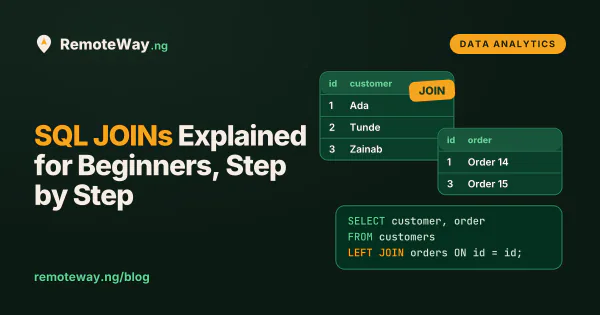
SQL JOINs Explained for Beginners, Step by Step
A plain guide to SQL JOINs for beginners. Learn what a join does, the difference between INNER and LEFT joins, and how to check your result.