Key takeaways
- Content writing informs and builds an audience over time.
- Copywriting persuades readers to take a specific action.
- Content lives in articles and guides; copy lives in ads, pages and emails.
- The two skills overlap, and many writers do both.
- Practise with made-up briefs and keep short samples.
People often use "content writer" and "copywriter" as if they mean the same thing. They overlap, but the work is different. Knowing the difference helps you choose what to learn, write better samples and describe your skills honestly. This guide explains both in plain words.
What is content writing?
Content writing aims to inform, educate or entertain. The goal is to share information readers can use and to build a relationship with them over time. It tends to be informative and advisory in tone, and the results build slowly. Good content stays useful for a long time and can bring readers back.
Typical formats include blog posts, how-to guides, listicles, case studies, ebooks, whitepapers, FAQs, newsletters, documentation and scripts.
What is copywriting?
Copywriting aims to persuade readers to take a specific commercial action, such as buying, subscribing or supporting a cause. The tone is persuasive and concise, because readers often give an advert only a moment of attention. Results can be fast, but they may fade quickly.
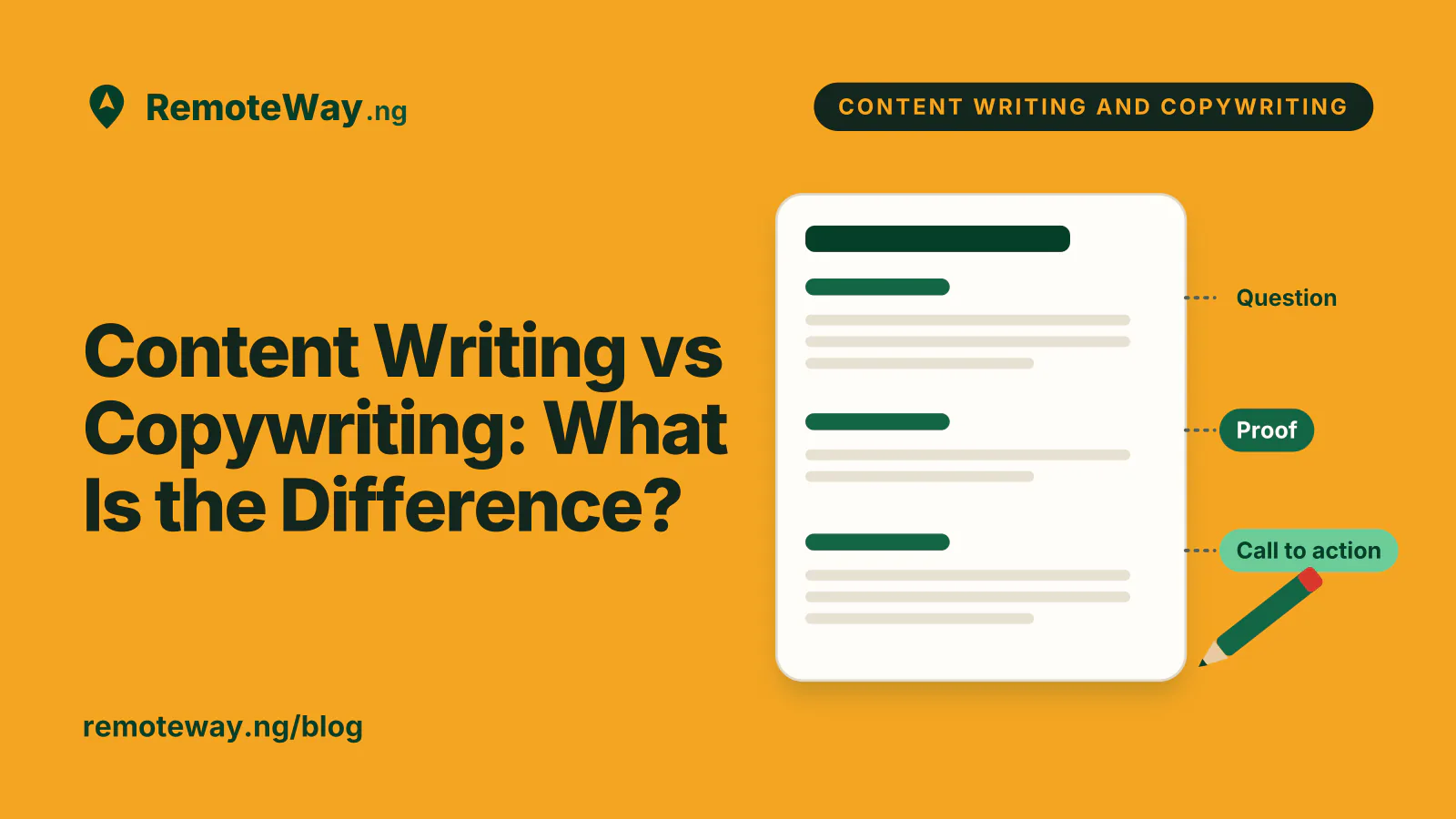
Typical formats include ads, product descriptions, landing pages, email campaigns, social posts, slogans, press releases and the tiny words on buttons and notifications. A piece of copy is not complete without a clear call to action: the one thing you want the reader to do next.
How do they compare?
| Content writing | Copywriting | |
|---|---|---|
| Main goal | Inform, educate, build trust | Persuade, prompt action |
| Tone | Helpful, explanatory | Persuasive, concise |
| Length | Often longer | Often shorter |
| Results | Build slowly, last longer | Faster, may fade |
| Examples | Guides, articles, FAQs | Ads, landing pages, emails |
| Key habit | Research and clear structure | Knowing the reader's motive |
The two can work together: useful content builds an audience, and sharp copy turns interest into action.
Which skills do both share?
- Clear, plain writing. Short sentences, concrete words.
- Research. Facts checked and sources noted.
- Reader focus. Who is reading, what do they already know, what do they need?
- Structure. A strong opening, a logical order and a clear end.
- Editing. Cutting, proofreading and reading aloud.
How can you practise each?
Content writing practice
- Choose a topic you know, such as "how to set up a weekly study plan".
- Write a short outline with a hook, three points, an example and a next step.
- Write 500 words in plain English.
- Check each fact and note your sources.
- Cut anything the reader does not need.
Copywriting practice
- Invent a small product, such as a notebook for students.
- Write a headline, three short benefit lines and a button label.
- Write an email of 100 words with one clear action. See how to write an email people open.
- Write three versions of the headline and choose one.
Keep your best pieces as samples. Use made-up brands and never copy someone else's work. Be honest about what is practice.
Which should you learn first?
Many beginners start with content writing because explaining a topic builds clarity, and clarity helps copy too. Others are drawn to the focus of copy. Try both for a week and notice which you want to repeat. Social media captions use both skills, as you can see in how to plan a week of social media posts.
Where can you learn it properly?
RemoteWay's Content Writing and Copywriting program is self-paced, with comprehensive training videos created by top experts in their fields. It teaches both styles in order, with practice tasks and feedback. We teach skills and do not promise jobs or income.
Frequently asked questions
What is the main difference between content writing and copywriting?
The goal. Content writing aims to inform, educate or entertain and to build a relationship with readers over time. Copywriting aims to persuade readers to take a specific action, such as buying or signing up. Content tends to be longer and explanatory, while copy is shorter and focused on the next step.
Which is easier for a beginner?
Neither is easy, but content writing is often a gentler start because you can focus on explaining a topic clearly. Copywriting asks you to persuade within strict space limits and to understand the reader's motives. Whichever you choose, clear plain writing is the foundation for both.
Can one person do both?
Yes. Many writers write articles one day and landing page text the next. The skills overlap: research, clear structure, knowing the reader and editing. They differ in purpose and tone. Content builds trust with useful information, and copy asks for action, so the two often support each other.
Sources
Ready to learn this properly?
Creating an account costs nothing. Every program is self-paced, with comprehensive training videos created by top experts in their fields. We teach skills. We don't promise jobs or income.
Keep reading
How to Write an Email People Open and Read
How to write emails people open and read: clear subject lines, a short first line, one clear ask, and the basic sender rules that keep your emails out of spam.
How to Plan a Week of Social Media Posts
A simple method to plan a week of social media posts: pick themes, batch your content, schedule it, leave room for live updates and review what worked.
How to Write a Calm Reply to an Upset Customer
A calm five-step method for replying to an upset customer in chat or email: listen, acknowledge, apologise, solve and follow up, with example wording.